
The Hidden Cost of a Slow Website: Why Every Second Is Costing Your Business Money
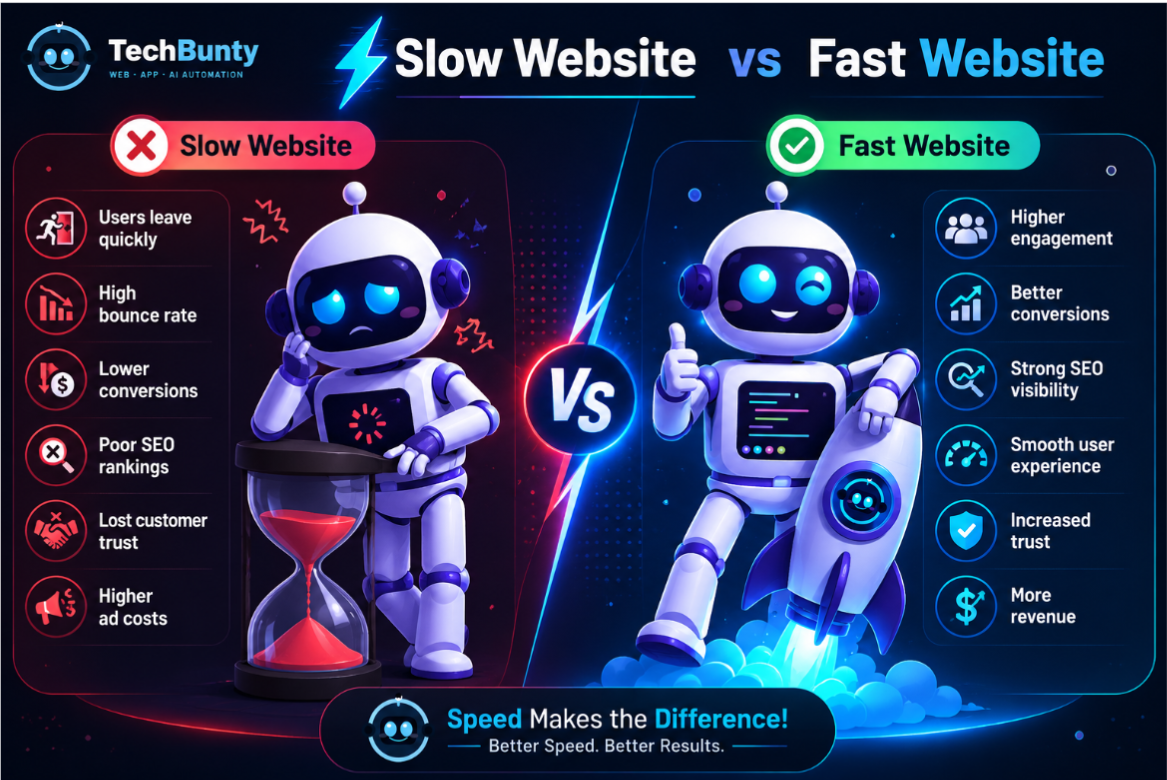
In today’s digital economy, website performance is not a technical luxury, it’s a core business function. The uncomfortable truth is simple: every extra second your website takes to load is quietly draining your revenue.
Speed Is No Longer Optional
In today’s digital economy, website performance is not a technical luxury, it’s a core business function. Users expect instant access to information, seamless navigation, and frictionless interactions. When those expectations aren’t met, they leave. And when they leave, they often don’t come back.
The uncomfortable truth is simple: every extra second your website takes to load is quietly draining your revenue, weakening your brand, and reducing your competitive edge.
This article explores the hidden costs of slow websites, combining technical insights, behavioral analysis, and business impact so you can understand not just what’s happening, but why it matters and what to do about it.
01
The Psychology of Speed: Why Users Won't Wait
Modern users have been conditioned by high-performance platforms like Google, Amazon, and social media apps. As a result, patience has dramatically declined.
Research consistently shows:
- Users expect a website to load in under 2–3 seconds
- After 3 seconds, abandonment rates spike sharply
- Mobile users are even less tolerant than desktop users
From a psychological standpoint, slow loading creates:
Frustration
Perceived inefficiency that builds resentment toward the brand.
Distrust
Questioning site reliability or security at a subconscious level.
Cognitive Fatigue
Users disengage mentally and lose interest in completing the task.
This isn’t just about inconvenience, it’s about breaking the user’s flow state. Once that flow is disrupted, conversion probability drops significantly.
02
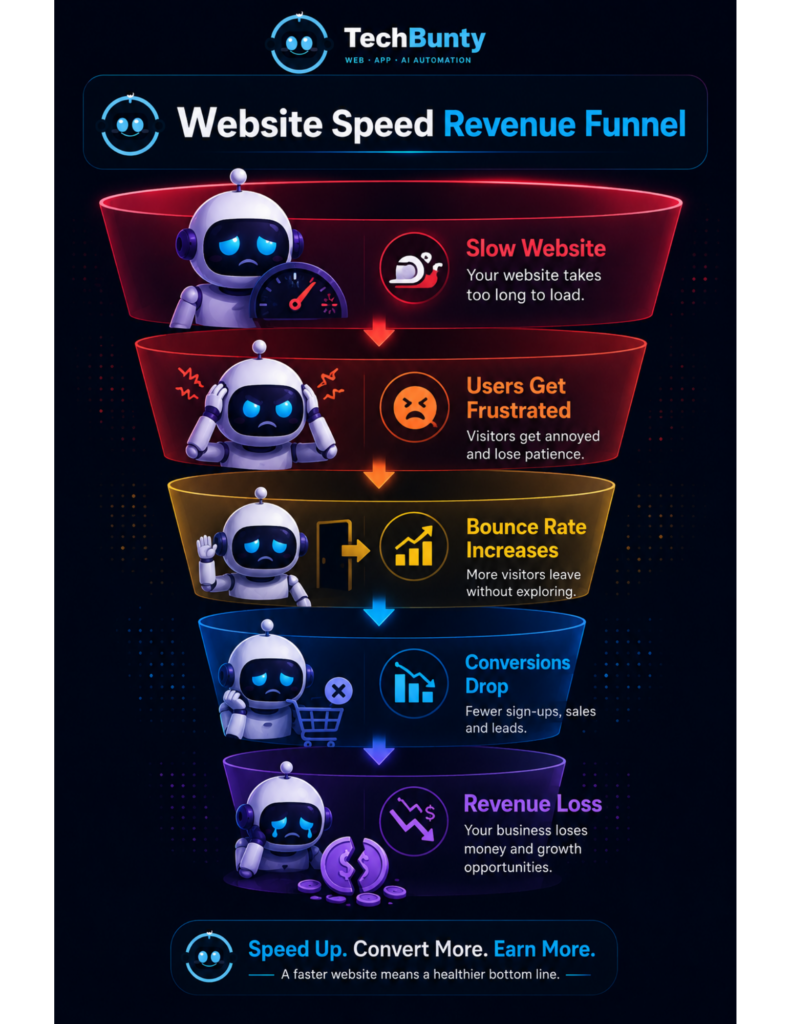
Revenue Leakage: The Direct Financial Impact
A slow website doesn’t just hurt user experience it directly affects your bottom line.
Conversion Rate Decline
➡️ Even a 1-second delay can reduce conversions by 7–20% depending on industry
➡️ Higher in eCommerce and SaaS environments
Lifetime Value Loss
➡️ Users with a poor first experience are less likely to return
➡️ Customer acquisition costs (CAC) increase
➡️ Lifetime value (LTV) decreases
Check our website development services to improve the quality of your digital footprints here.
03
SEO Penalties: How Speed Affects Your Visibility
Search engines, particularly Google Chrome and Google’s broader ecosystem, have made performance a ranking factor through Core Web Vitals.
Key Metrics That Matter
➡️ Largest Contentful Paint (LCP)
– loading speed
➡️ First Input Delay (FID)
– interactivity
➡️ Cumulative Layout Shift (CLS)
– visual stability
If your site is slow: rankings drop, organic traffic declines, cost of paid acquisition increases.

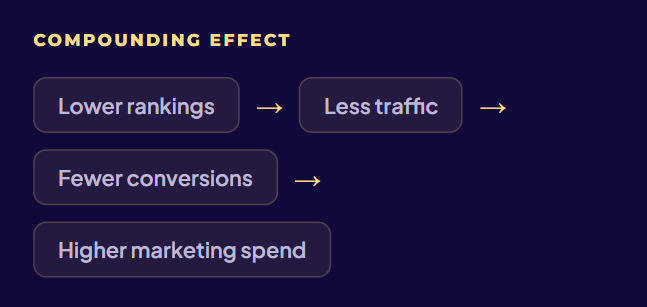
Analysis Insight
Speed doesn’t just affect users rather it affects how discoverable you are in the first place. A slow site creates a double penalty: fewer visitors and worse conversion rates.
04
Mobile Performance: The Silent Killer
More than half of global web traffic comes from cellular devices. Yet mobile networks are less stable, more latency-prone, and dependent on device performance. A website that feels “acceptable” on desktop can be painfully slow on mobile.
Common Issues
➡️ Heavy images not optimized for mobile
➡️ JavaScript-heavy pages
➡️ Poor server response times
Business Impact
➡️ Lost users in emerging markets
➡️ Reduced engagement time
➡️ Lower app-like experience expectations
Many businesses design for high-speed office Wi-Fi, but their users are browsing on 4G or unstable networks. This mismatch creates a performance illusion: you think your site is fine, but your users experience something entirely different.
05
Brand Perception: Speed as a Trust Signal
Website speed is often interpreted subconsciously as a reflection of your brand.


Real-World Behavior: Users are more likely to trust and purchase from a site that loads quickly, responds instantly, and feels smooth and stable.
Website Speed is not just technical, it’s emotional branding. It shapes how users feel about your business before they even read your content.
06
Operational Costs: The Hidden Backend Expense
Slow websites don’t just affect users they increase internal costs as well.
Higher Infrastructure Costs
Inefficient code requires more server resources, poor caching leads to repeated data processing, and increased bandwidth usage adds up quickly.
Support Costs
More user complaints, increased customer service load, and higher churn management efforts.
Developer Time
Fixing performance issues later is more expensive than building efficiently from the start.
Performance debt is like technical debt it compounds over time. Ignoring it early leads to exponential cost growth later.
07
Competitive Disadvantage: Speed as a Market Differentiator
In competitive markets, users often compare multiple options. If your competitor’s site loads faster, they win the first impression, they capture attention first, they convert users before you even load.
Micro-Moments Matter. Users make decisions in seconds: which result to click, which product to explore, which service to trust. If your website is slow, you lose these micro-moments.
Website speed is not just about optimization it’s about market positioning. Faster websites effectively “cut the line” in user decision-making.
08
The Data Behind Speed: What Studies Show
Several industry studies highlight the impact of performance:
09
Common Causes of Slow Websites
Understanding the problem is the first step to solve it.
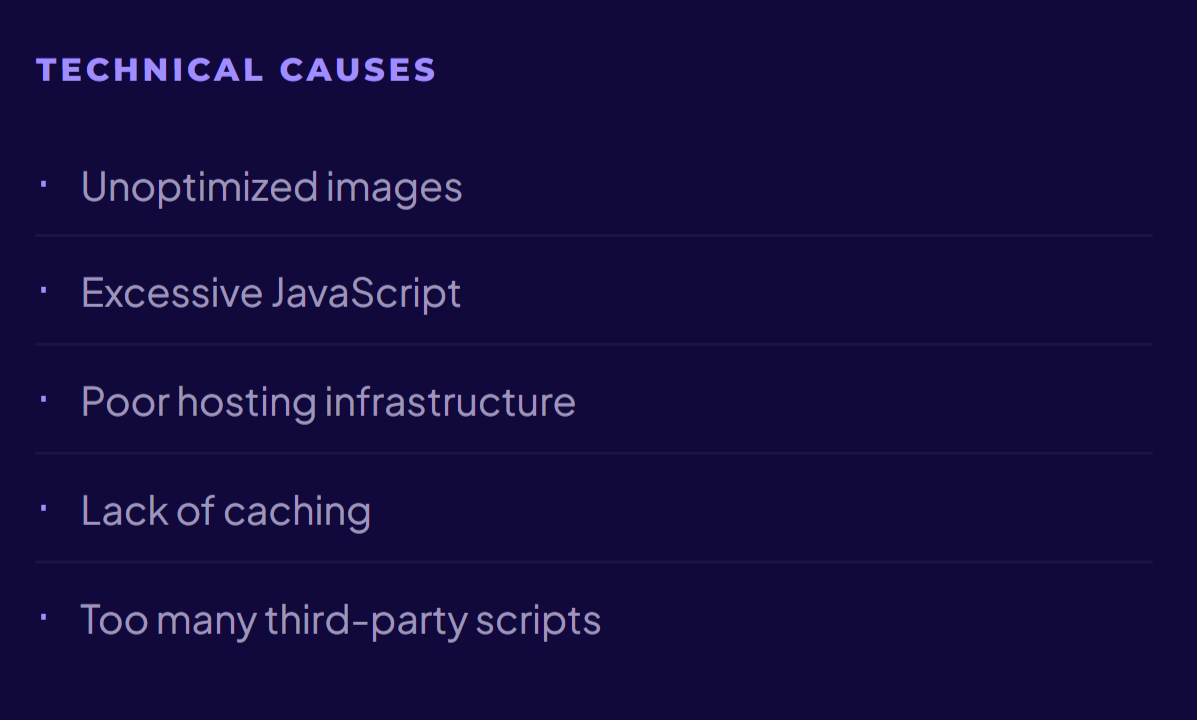
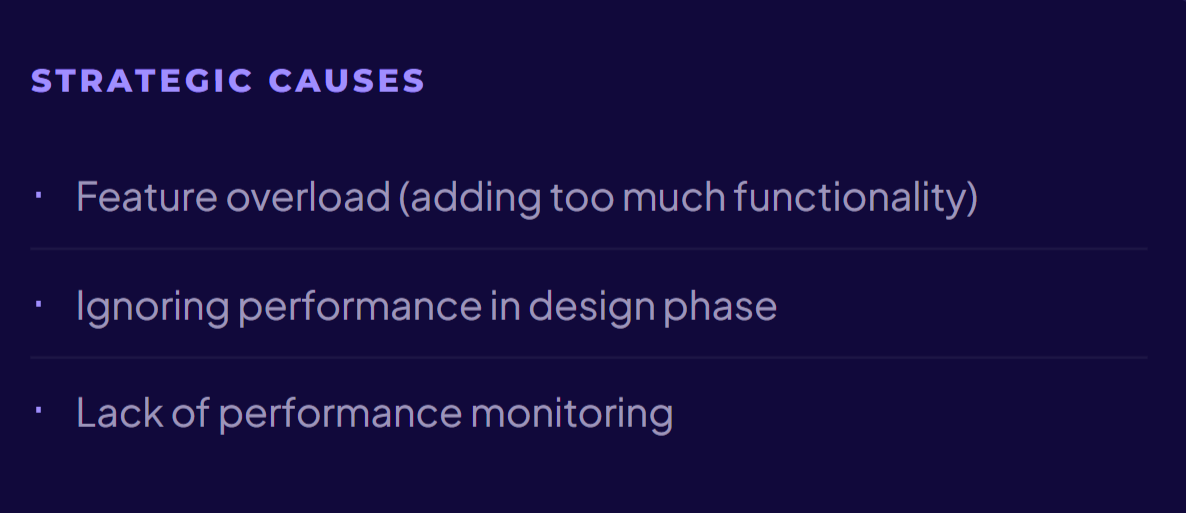
Most slow websites are not caused by one major issue, but by many small inefficiencies stacking together.
10
How to Fix It: Practical Solutions
Improving slow website speed requires a combination of technical fixes and strategic thinking.
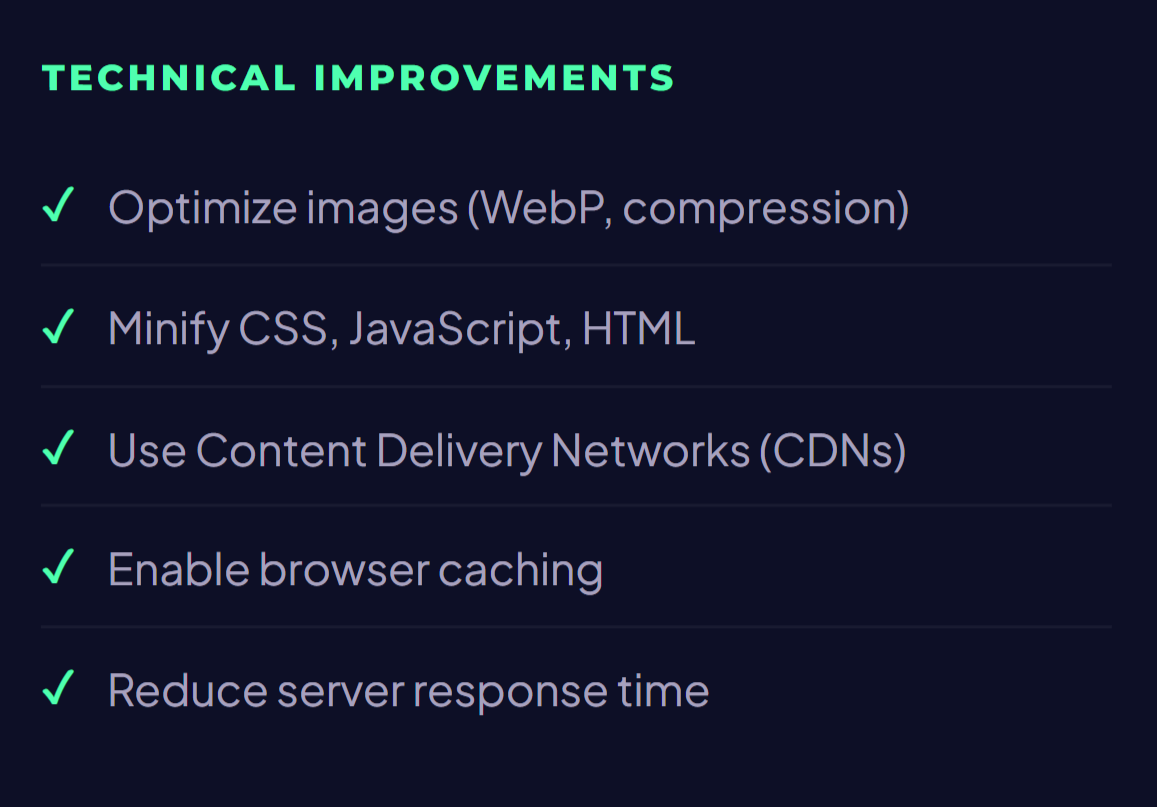
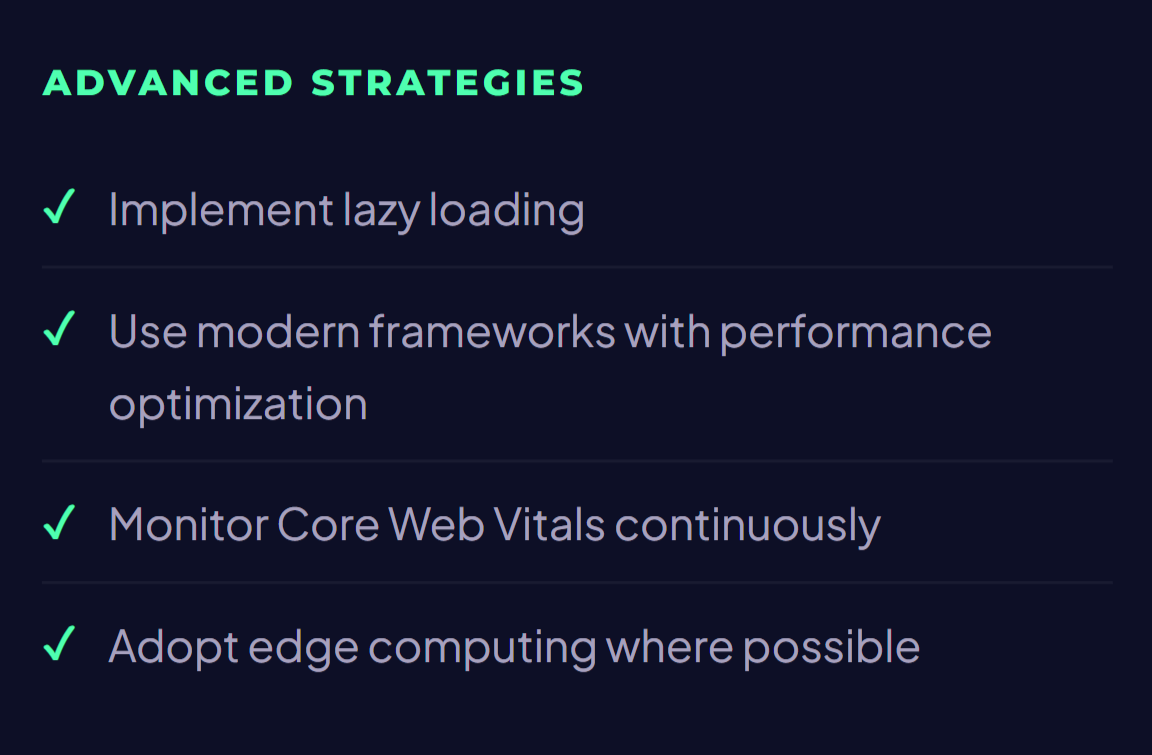
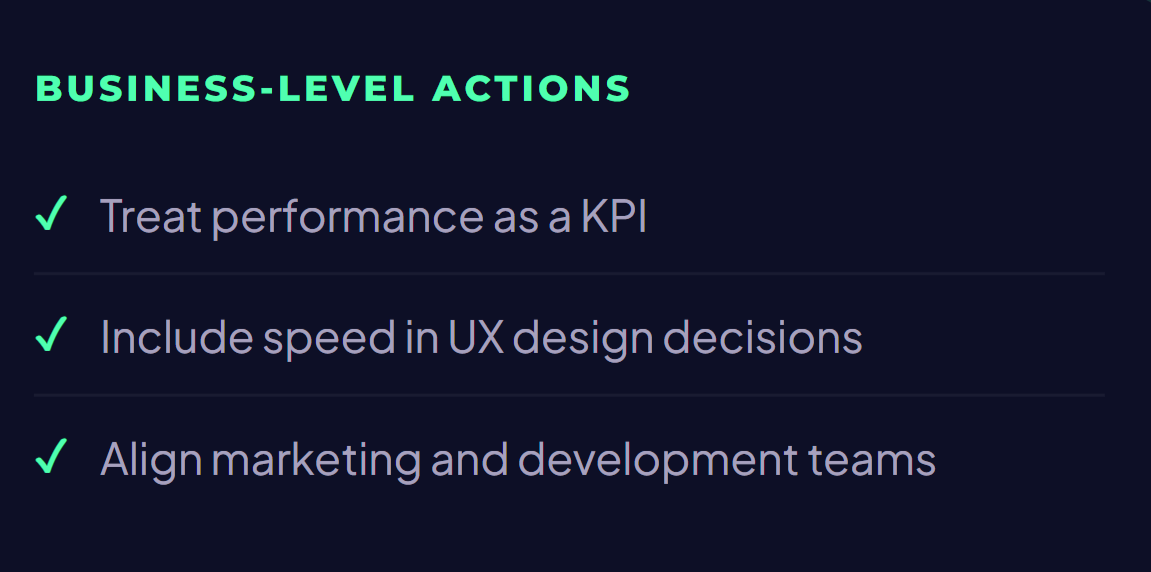
The highest-performing companies treat speed as a core business metric, not just a technical concern.
11
Measuring What Matters
You can’t improve what you don’t measure.
Key Tools
Metrics to Track:
- Page load time
- Time to first byte (TTFB)
- Core Web Vitals
- Bounce rate vs load time correlation
Raw speed metrics are useful, but the real value comes from connecting them to business outcomes like conversion rates and revenue.
3 Fresh Benchmarks on Website Speed
These resources provide fresh, up-to-date benchmarks and case studies highlighting how web speed directly dictates business revenue, SEO rankings, and consumer psychology:
1. Website Load Time Statistics for 2026: Trends & Key Insights
2. Website Speed Statistics 2026: Key Benchmarks and Data
3. Website Speed and Page Load Time Statistics For 2026
Example: Amazon's Website Speed Impact 🛒
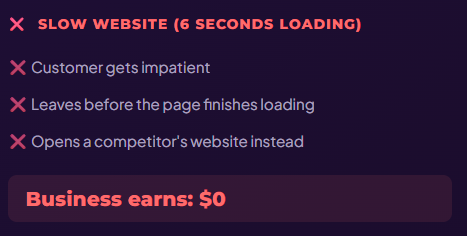
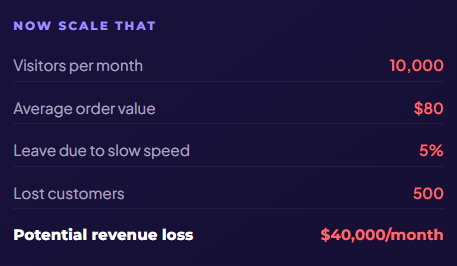
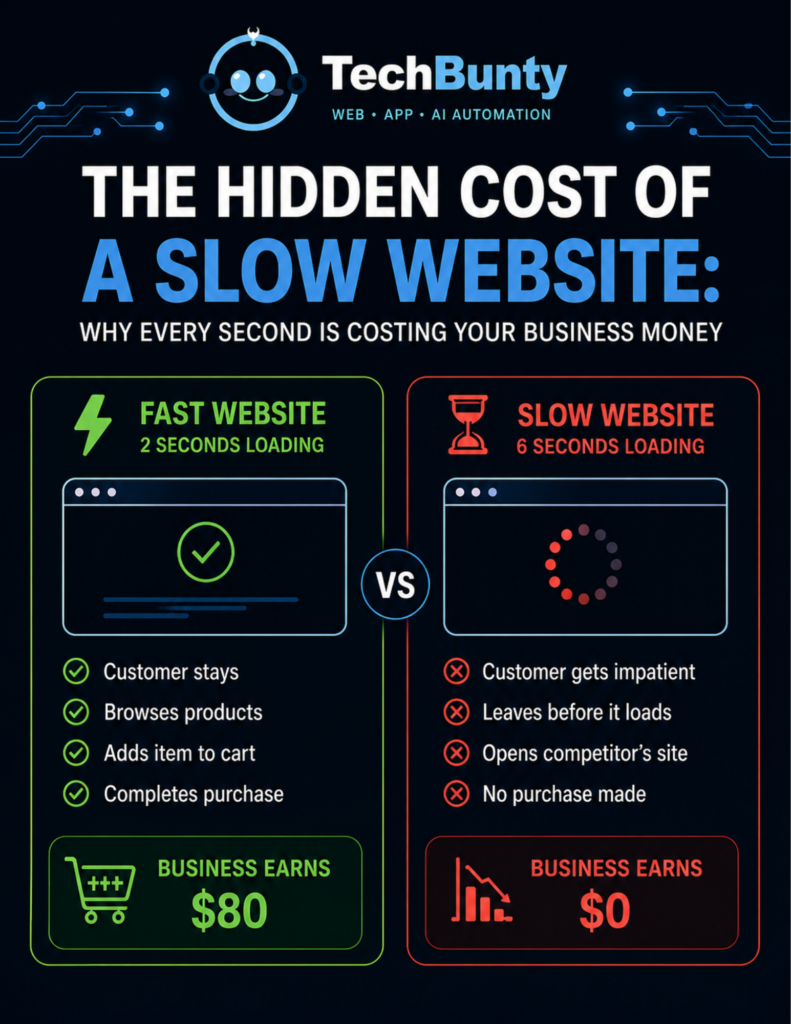
A real-life example you can use: Imagine an online customer visits an e-commerce site to buy a $80 pair of shoes.
Fast vs Slow — $80 Shoe Purchase


Key Points
A slow website quietly drains your revenue and weakens user trust. In a speed-driven digital world, performance isn’t optional, it’s essential for growth.
Delays reduce conversions
Every second of delay measurably hurts your bottom line.
Speed impacts SEO
Via Google Chrome metrics and Core Web Vitals rankings.
Faster sites build trust
And drive measurable, repeatable results.
Speed Is Revenue
A slow website is not just a technical flaw, it’s a business liability. It affects how users perceive your brand, how search engines rank your content, and ultimately how much revenue you generate. In a world where attention is scarce and competition is fierce, speed is one of the few advantages you can fully control.
Table of Contents
ToggleKey Stats

Stop Losing Revenue
Let TechBunty help you turn speed into your competitive advantage. Optimize performance, boost conversions, and grow revenue starting today.
Latest Post
- All Posts
- AI
- AI Agents
- AI Automation
- Anthropic
- App Development
- Cybersecurity
- LLMs
- Physical Ai
- Web Development