
Offline-First Engineering: Building Mobile Apps That Work Seamlessly Without Internet
Getting people to download your app is not the part anymore. The hardest part is keeping them interested when the internet is not working.
Your App Needs to Work Without Internet
For a time people who make apps for phones have been focused on making them fast and getting information from the cloud quickly.
Companies have spent a lot of money on things that help apps talk to each other and update in time because phone networks have gotten faster and better.
But there is one problem that a lot of companies do not think about:
People use your app in elevators and parking garages and airports and in the country and at events and on bad Wi-Fi and in places where the phone signal is not good.
What happens is that your app might work well in the office but it does not work very well in real life.
The companies that are doing the best with apps, for phones are not just making apps that need the internet to work. They are making apps that still work when the internet is not working.
Analysis Insight
The question is not whether your app works when you are online. The question is whether people still think your app is useful when they are offline.
Your app needs to be useful when the internet is not working. The people who make apps need to think about how your app works when the internet disappears. Your app should still be useful even when you are not connected to the internet.
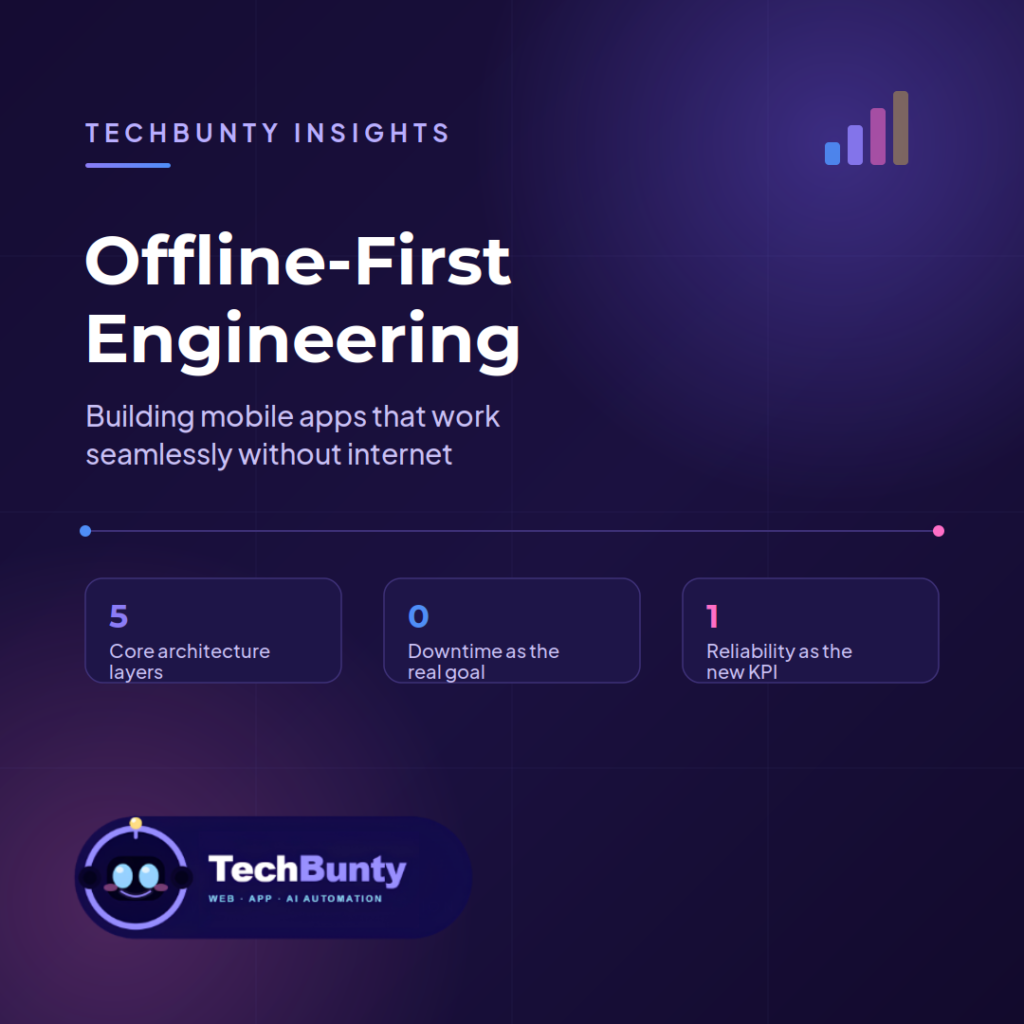
Why Connectivity Has Become the Hidden Retention Problem
Most mobile products still need to talk to the server a lot for the simplest things. They need to do things like
- Opening dashboards
- Loading customer profiles
- Viewing inventory
- Reading documents
- Accessing transaction histories
When the connection is not good everything gets slower. Every time something is slow it is annoying. Every time something stops working people are more likely to stop using the product entirely.
This is a problem that people do not really notice.
The mobile product is. Then people leave, but the reason they leave is not always clear.
The people who look at how users behave see that users stop using the mobile product but they do not always see that it was because the connection was bad.
From the users point of view it does not matter why the mobile product is not working.
The mobile product just does not work.
People usually do not try to use the mobile product again.
Analysis Insight
The mobile product has a problem with people stopping to use it because of the connection. This is something that is not always seen.
Most mobile products still have this problem, with the connection. It is something that needs to be fixed.
Offline-First Is Not an Offline App
One of the misconceptions about making apps for mobile devices is that offline-first means the app works when it is not connected to the internet.
This is not true.
Offline-first engineering is a way of designing apps where we think that the internet connection may stop working at any time and the app is made to keep working
We do not think of the app not being connected to the internet as something that only happens sometimes. Instead we make the app work like it is not connected to the internet all the time.
The way we build the app is based on an idea:
We use the information that’s on the users device first.
Then we send the information to the internet when we can.
Users can use the information that’s on their device right away. The app sends the information to the internet when it can.
This makes the app feel like it is working quickly. It is reliable and it keeps working all the time.
Analysis Insight
When the user’s internet connection is not working the app still feels like it is working. The mobile app feels like it is working when the internet is not.
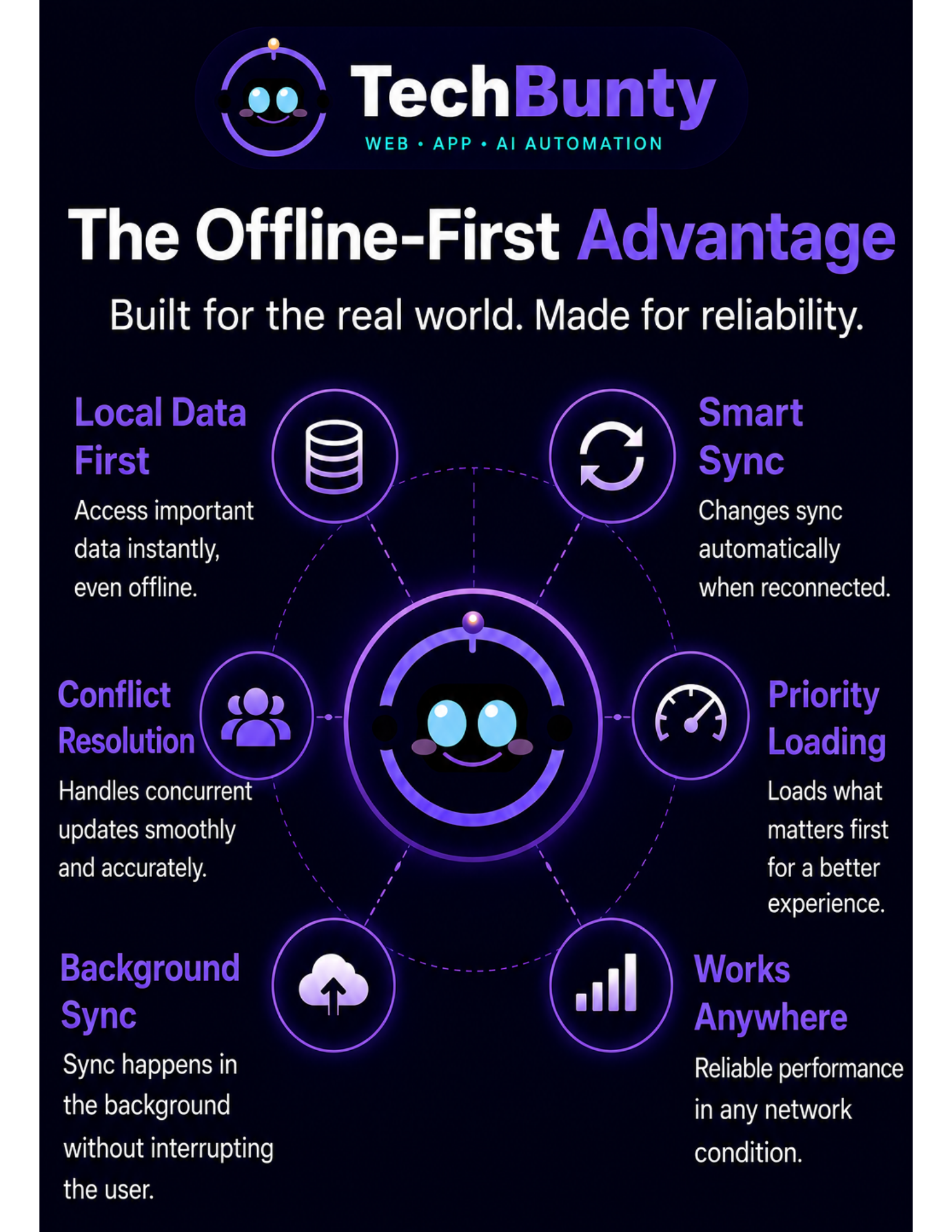
The New Competitive Advantage: Reliability
Historically companies used to compete based on the features they offered. Then they started competing on design. Now reliability is becoming a factor that sets companies apart from one another.
Users expect apps to work well all the time no the conditions.
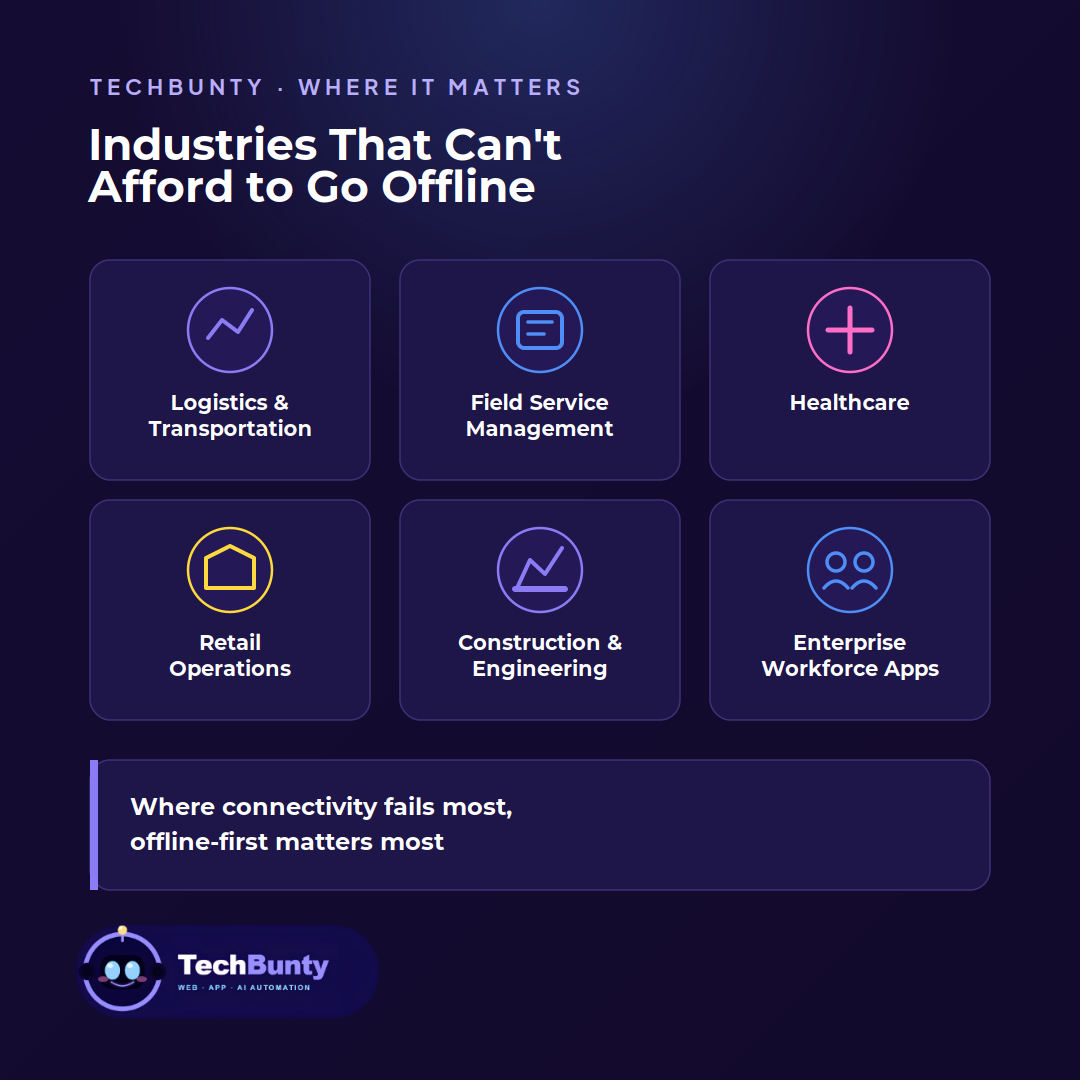
This is especially important in areas like:
➡️ Logistics and transportation
➡️ Field service management
➡️ Healthcare
➡️ Retail operations
➡️ Services
➡️ Construction and engineering
➡️ Enterprise workforce applications
In these fields problems, with connectivity happen often.
Analysis Insight
An application that works offline helps employees keep working, collecting data and finishing tasks without any issues.
This way productivity stays high. Customer experiences stay consistent. Delays that affect revenue are reduced.
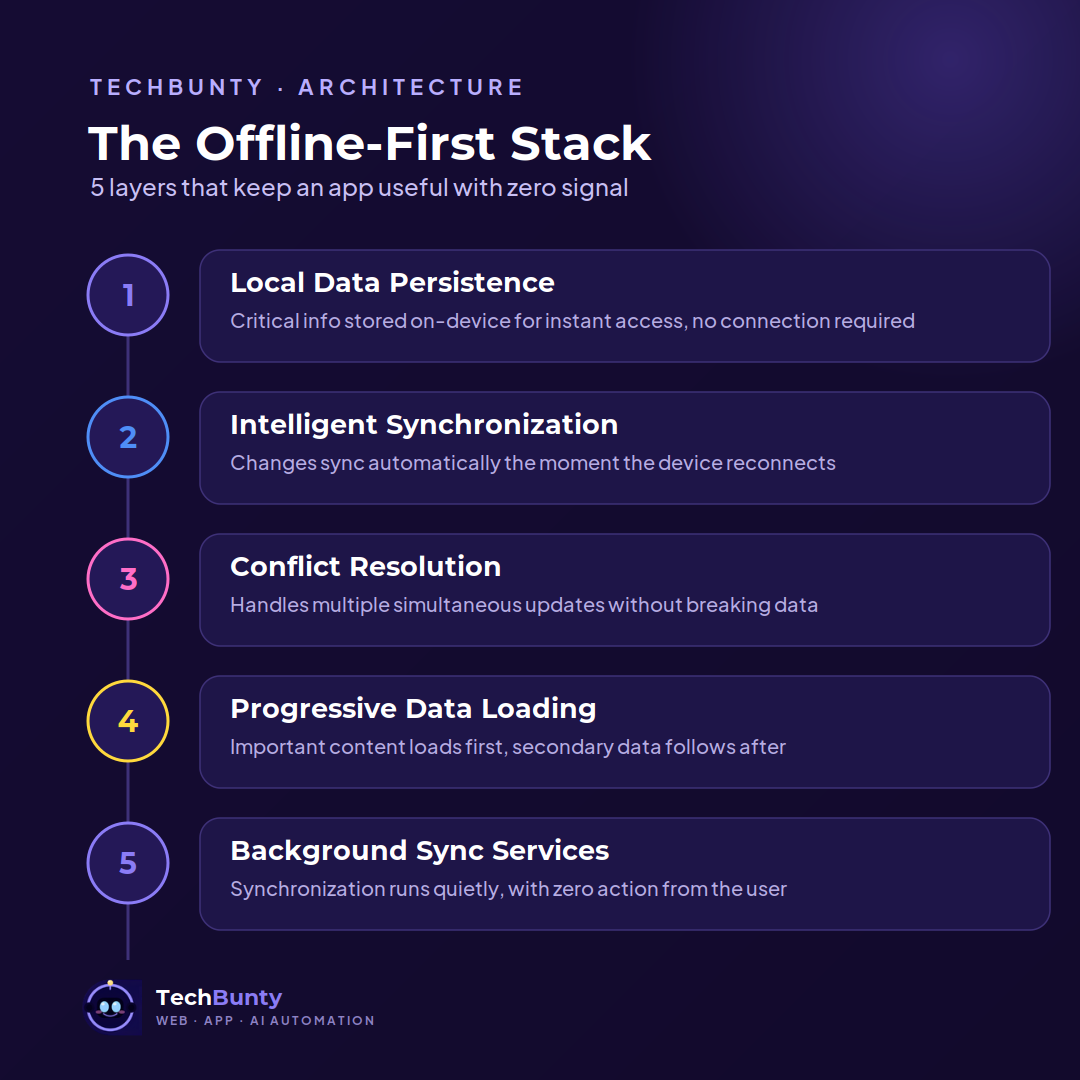
Building the Offline-First Stack
To make a website work well offline you need more than a place to store things on the users device.
The best way to do this is to use a different layers:
Local Data Persistence
Critical information is stored on the device so the user can see it right away without needing to be connected to the internet.
Intelligent Synchronization
These changes are synced automatically when the device reconnects to the internet.
Conflict Resolution
Systems need to figure out how to deal with lots of updates happening on devices at the same time.
Progressive Data Loading
Applications focus on the important stuff first and then get the less important things later.
Background Sync Services
The synchronization process happens behind the scenes without needing the user to do anything.
Analysis Insight
Together these systems, applications and synchronization transform connectivity from something we rely on to something that makes things better.
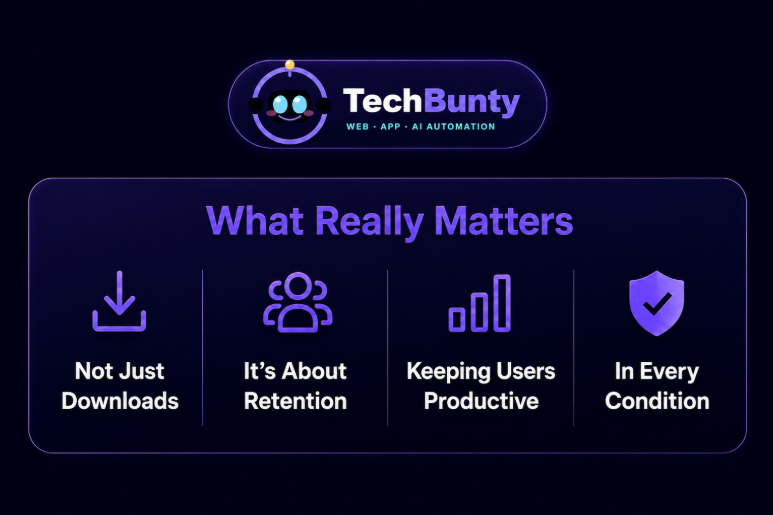
The Real KPI Isn't Downloads
Many organizations still think that how well their mobile thing is doing is based on how many people download it and sign up. These things are not as important as they used to be.
What really matters is if people can keep using the thing even when their internet is bad.
Making mobile things work well without the internet makes a big difference.
Analysis Insight
The organizations that figure out how to do this make people want to use their thing more and trust it more. They also make people want to keep using it so they do not lose them.
What Has to Hold
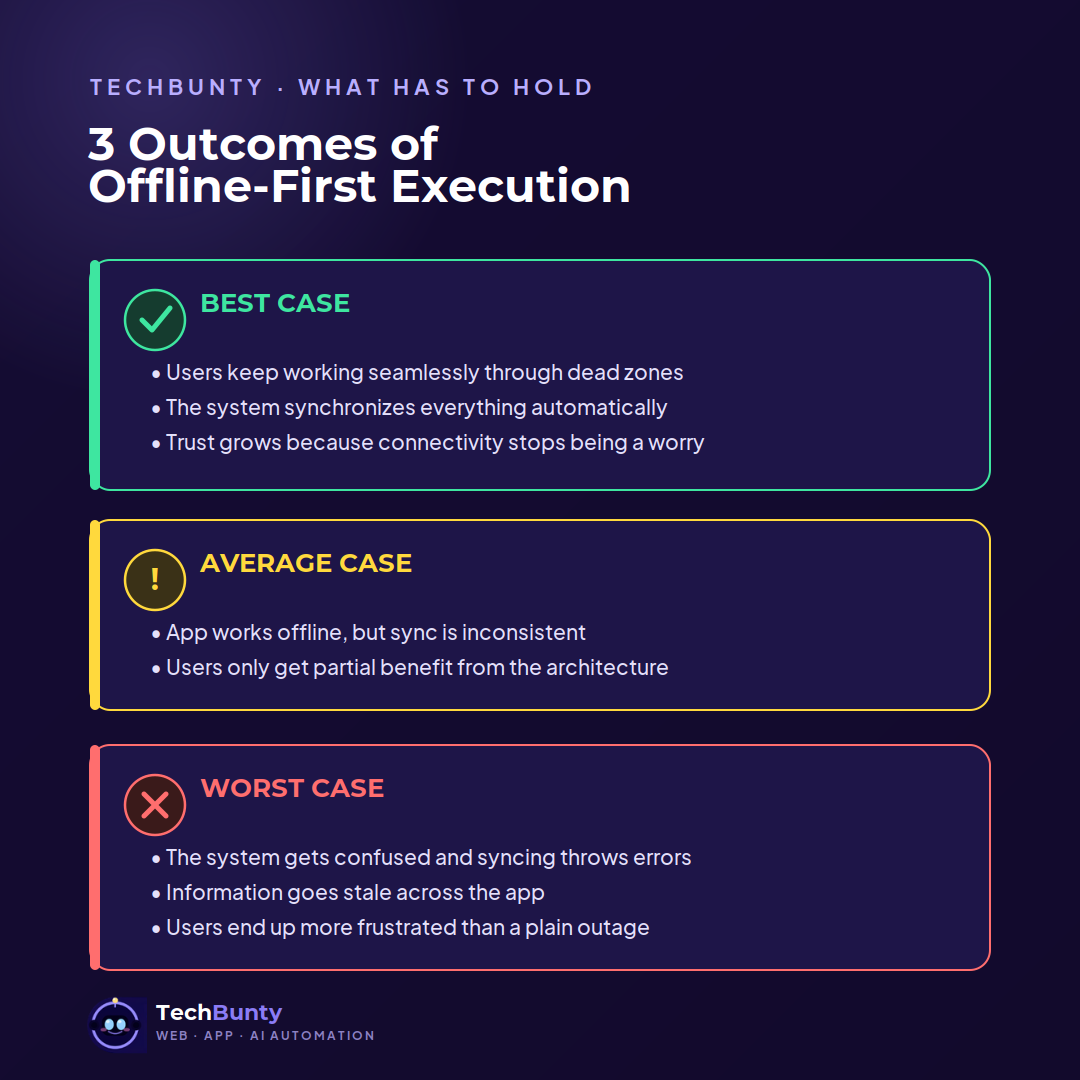
The idea of first architecture is really great but it is the execution of offline-first architecture that determines the success of offline-first architecture.
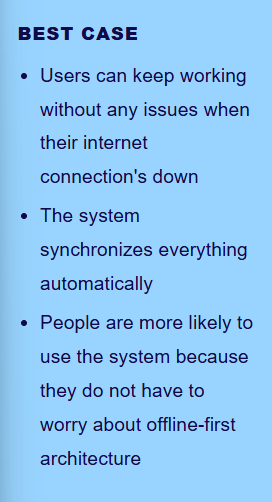
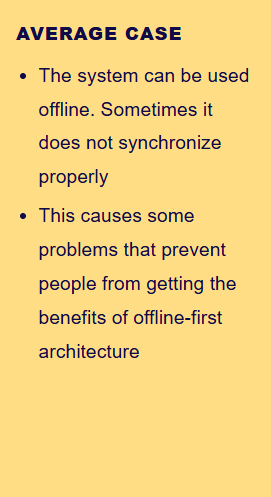
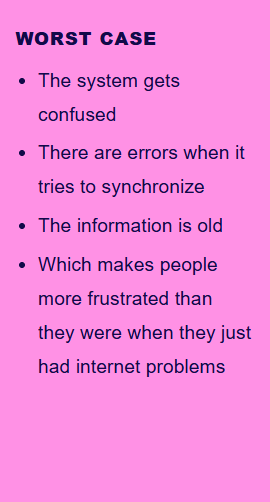
In the end offline-first architecture is successful because of one thing:
Analysis Insight
Offline-first architecture has to be easy to use.
People should not have to think about whether they’re online or offline. They should not have to think about what’s being synchronized. They should not have to think about how the system’s working with the data.
People should just be able to keep working with first architecture.
4 Recent Developments on Offline-First Engineering
Here are 4 recent news and industry developments you can reference alongside your article, on Offline-First Engineering:
1. Offline-First Mobile Apps Becoming a Core Enterprise Requirement
People who know a lot about the technology industry say that offline-first architecture is becoming a must have feature for mobile applications. This is especially true for things like field services and healthcare and logistics and fintech. Developers are using databases and smart ways to synchronize data to make mobile applications more reliable and to keep users interested in the mobile applications. They are doing this because first architecture is very important for modern mobile applications. (Zignuts)
2. Progressive Web Apps (PWAs) Driving Offline Experiences in 2026
Progressive Web Apps are really taking off because they give people an experience that’s similar to a mobile app and they can still use them when they are not connected to the internet. This is possible because of service workers and local caching. Businesses are using Progressive Web Apps more and more to make sure that people can look at content and get things done when their internet connection is not very good. Progressive Web Apps are a way to do this.(DEV Community)
3. Edge Computing Accelerating Offline-First Adoption
The growth of edge computing is really making a difference. It is reducing our dependence, on cloud systems that are usually far away. Organizations are now able to process and store data where the users are which means things work faster, our information is safer and we can still do things even when the internet is not working.. When we get connected again everything syncs up nicely. This is all because of edge computing. Edge computing is helping us to do things faster and better. (ObjectBox)
4. Rising Investment in Sync Architecture for Mobile Apps
A lot of companies are now spending a lot of money on synchronization layers and conflict-resolution systems. Reports from the industry show that even though first apps take more time to develop at first companies are getting a lot back in the long run. They are getting reliability, less downtime and users are more engaged with offline-first apps. This is really good, for companies that use first apps.(Calibraint)
The Future of Mobile Experiences
As mobile applications become really important for businesses, companies will have to make a decision.
They can keep making apps that work well when the internet connection is good. They can make apps that work well even when the internet connection is not so good.
The companies that make apps that work without the internet are making products that people can use no matter how strong or weak their signal is. These apps are useful when the internet is slow or when there are problems with the network.
Because more and more people are using their mobile phones, being useful is what makes people keep using an app.
Analysis Insight
The best mobile experience is not when an app works perfectly when you are online. It is when people can use the app anywhere they go.
With Tech Bunty people can make apps that work everywhere, not just when they are online. This is because when an app is reliable people will keep using it and that is what really matters for businesses.
Closing Advice
Offline-first success comes down to one thing: reliability in the real world. If your app can’t deliver value without perfect connectivity, users won’t stick around. Focus on making your core experience dependable anytime, anywhere.
Prioritize core features
That must work offline.
Design for real-world conditions
For low or no connectivity, not ideal conditions.
Invest in sync logic
Strong sync and conflict resolution logic.
Test in the field
Test your app in real-world network scenarios.
Measure continuity
Measure success through user continuity, not just downloads.
Keep it invisible
Make offline functionality invisible and effortless for users.
Reliability Is the Real Product
Offline-first success comes down to one thing: reliability in the real world. If your app can’t deliver value without perfect connectivity, users won’t stick around.
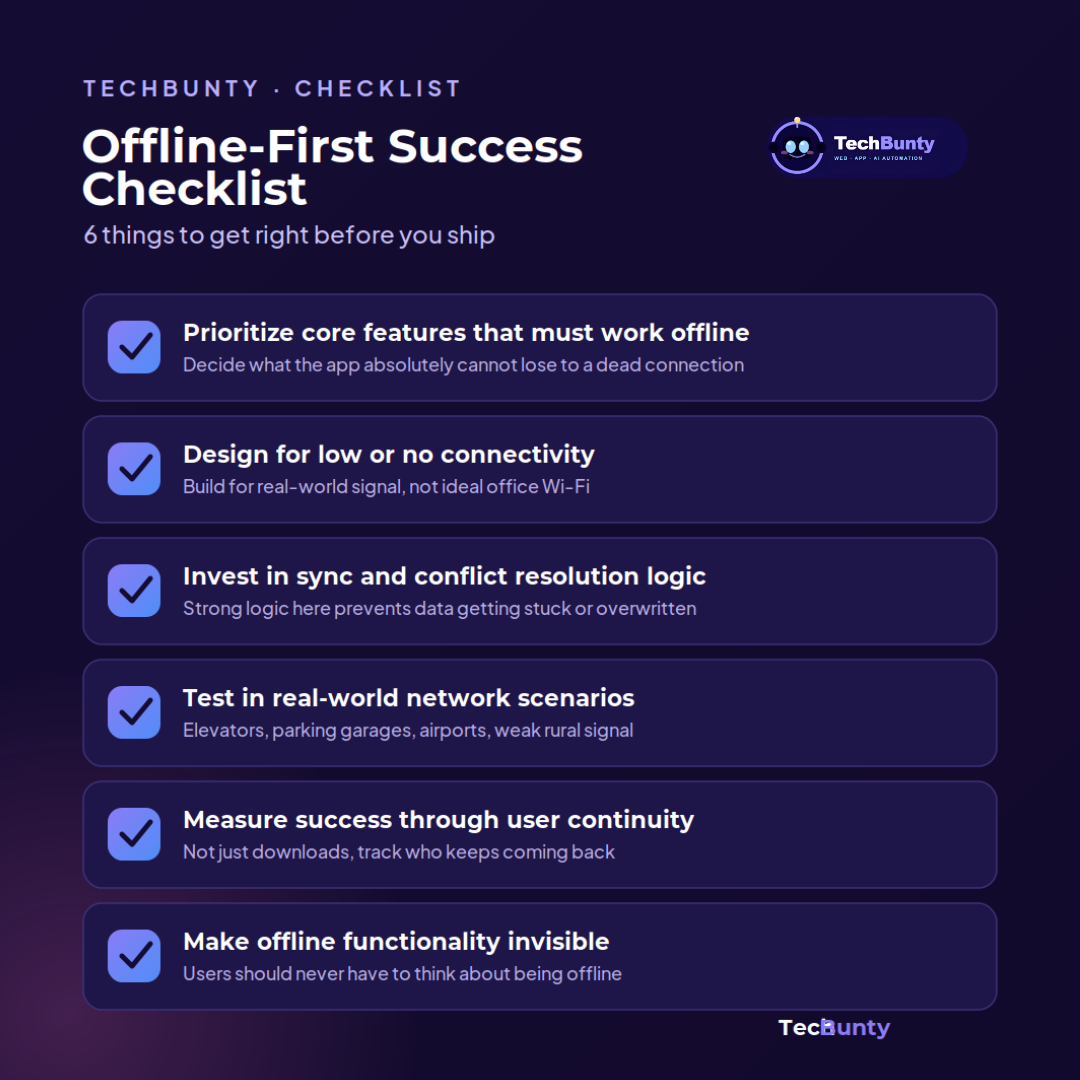
Table of Contents
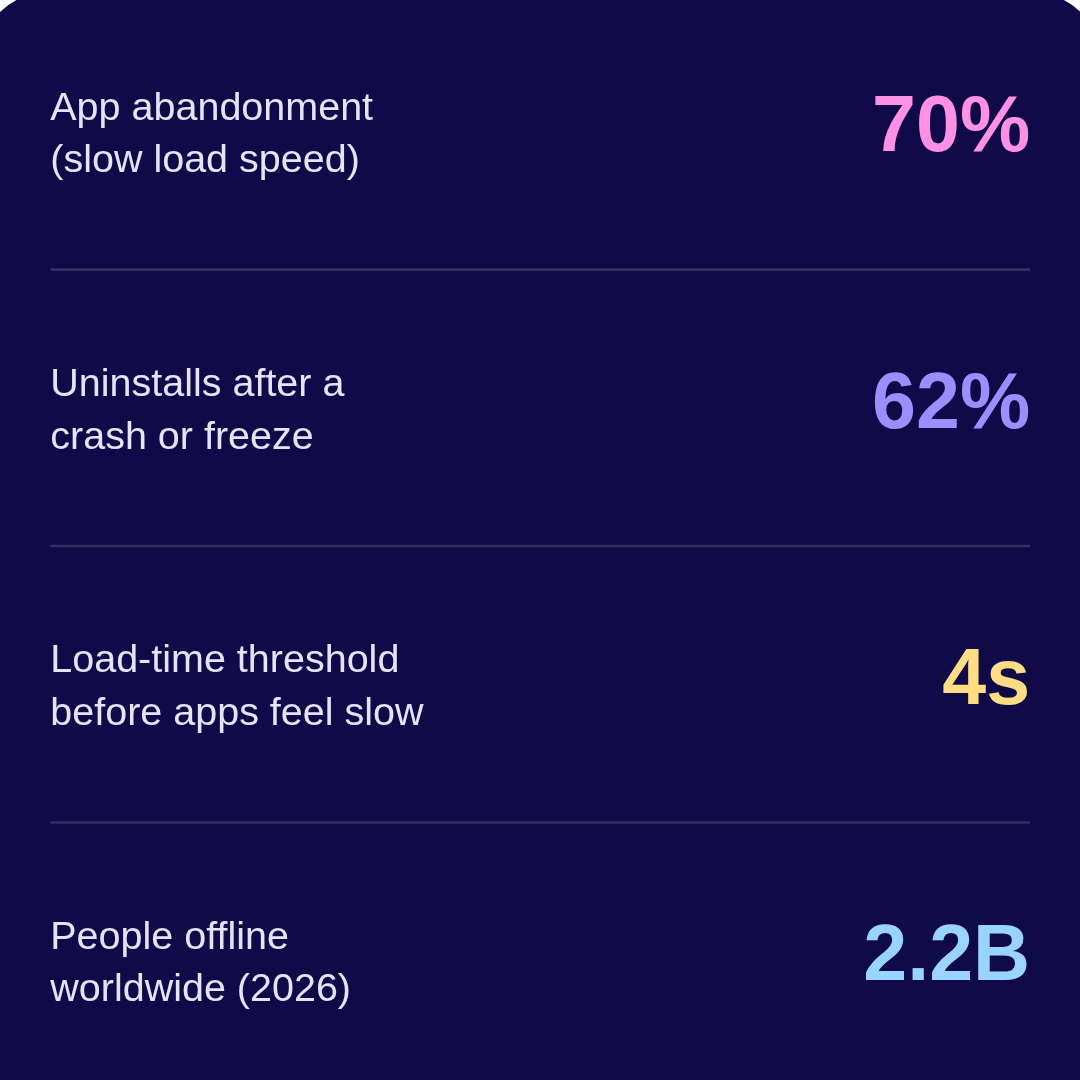
ToggleKey Stats
Apps that work everywhere
To collaborate on making apps that really speak and breath then contact us to get started.
Latest Post
- All Posts
- AI
- AI Agents
- AI Automation
- Anthropic
- App Development
- Cybersecurity
- LLMs
- Physical Ai
- Web Development